
How do porta potties work?
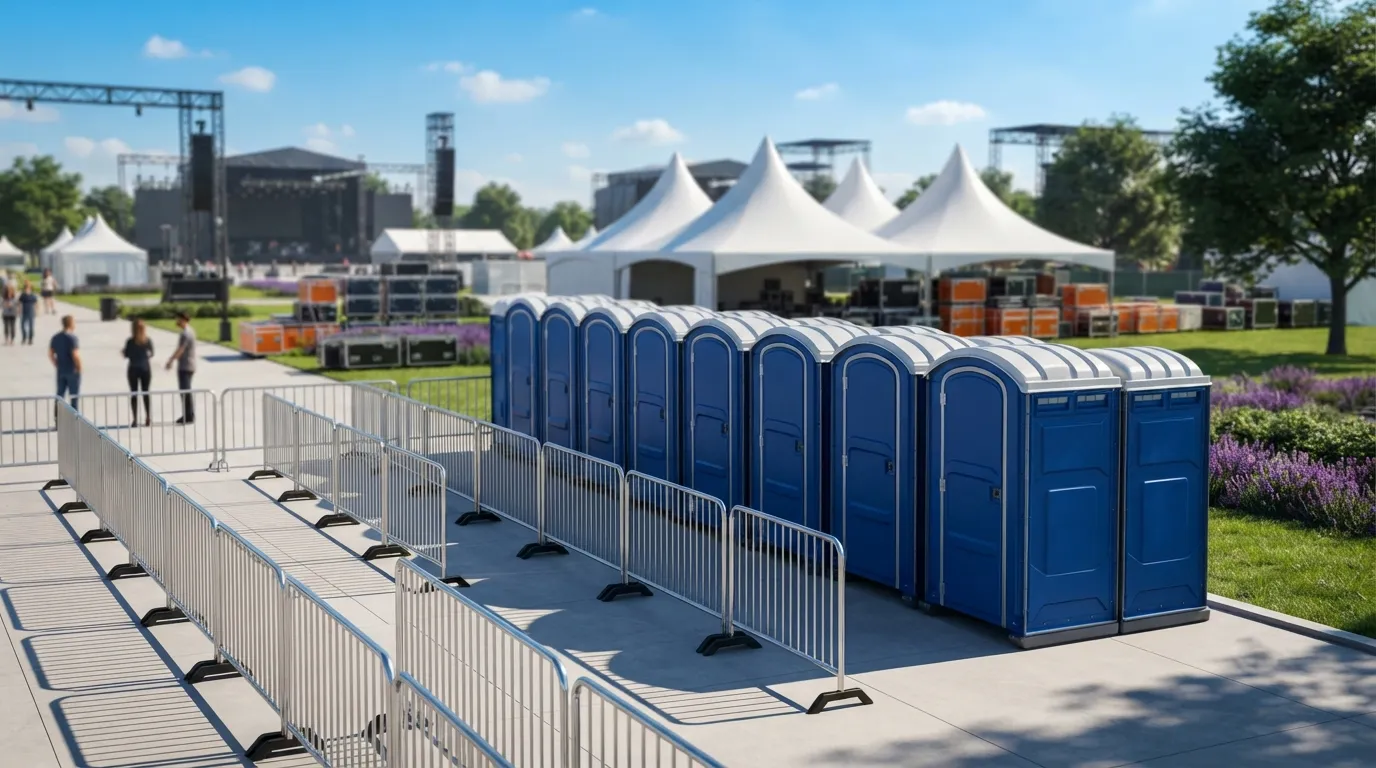
The basic unit is simple. Waste drops through the seat into the tank below, where blue chemical treatment starts breaking it down and holding odor back. A standard unit stands about 92 inches tall and sits on a footprint of roughly 44 by 48 inches, small enough for a backyard renovation job or tight jobsite in Escondido. There is no plumbing hookup. That is the whole point, portable means self-contained. A vent pipe runs up the back to push gas out above head height instead of building up inside. When the tank nears capacity, a service truck vacuums it out, rinses it, and redoses the chemical. For most rentals under standard porta potty rental, that servicing happens on a set weekly rhythm rather than on demand. If you are trying to figure out how many units a job needs, how many porta potties do I need walks through headcount math tied to OSHA ratios.
How do flushable porta potties work?
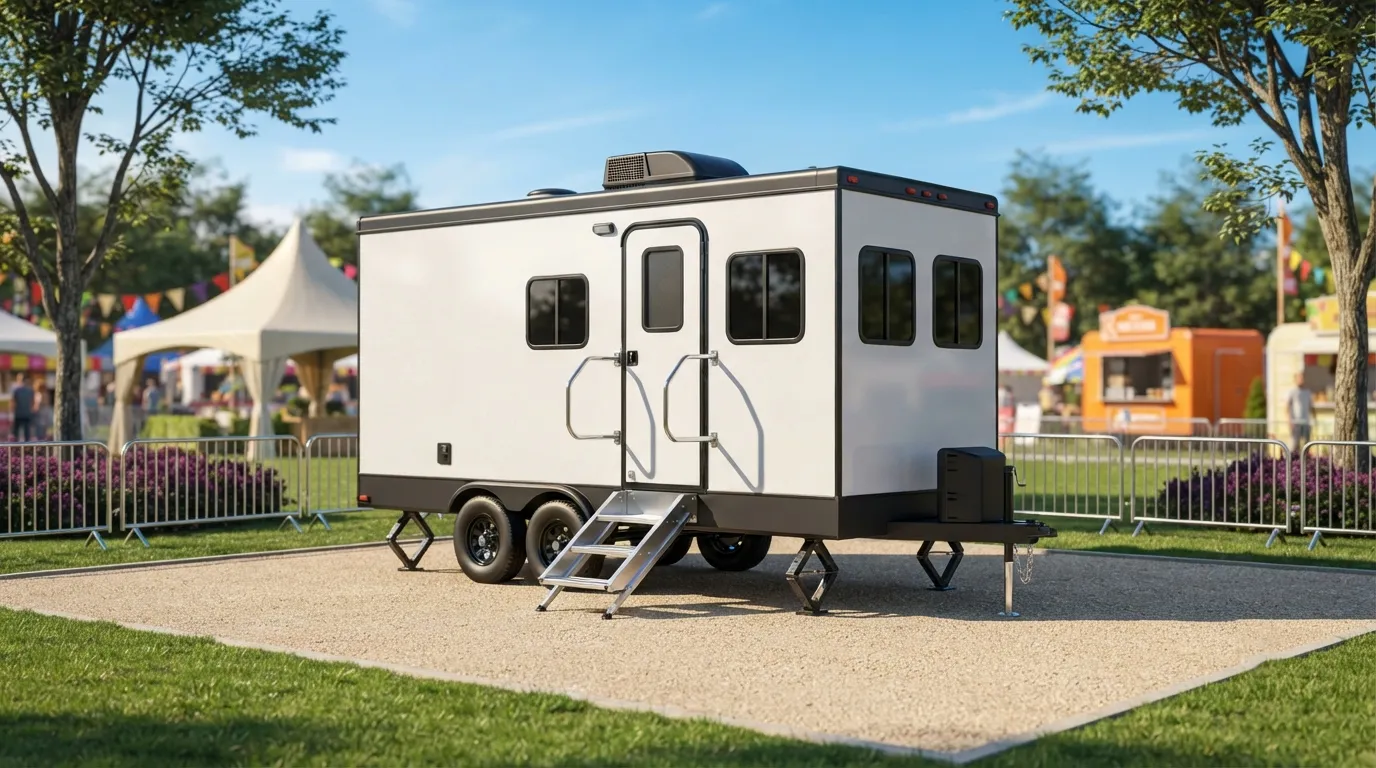
A flushable unit, sometimes called a deluxe unit, uses a small onboard freshwater tank and a foot pump or handle to push a rinse of water into the bowl after use, similar to a low-flow RV toilet. The waste still goes into a holding tank below, just like a standard unit, but the flush cuts down on odor and buildup between services. These run from the deluxe flushable porta potty line and often include a sink built into the same unit. They cost more than a standard rental because of the added plumbing, and they still need the same pump-out visits. Some deluxe units also add interior lighting and hand sanitizer dispensers, which matters for evening events around Escondido where a construction crew wraps a shift after dark or a wedding runs past sunset. Check wedding restroom rental if you're planning something more polished than a jobsite unit.
How does a portable sink work?
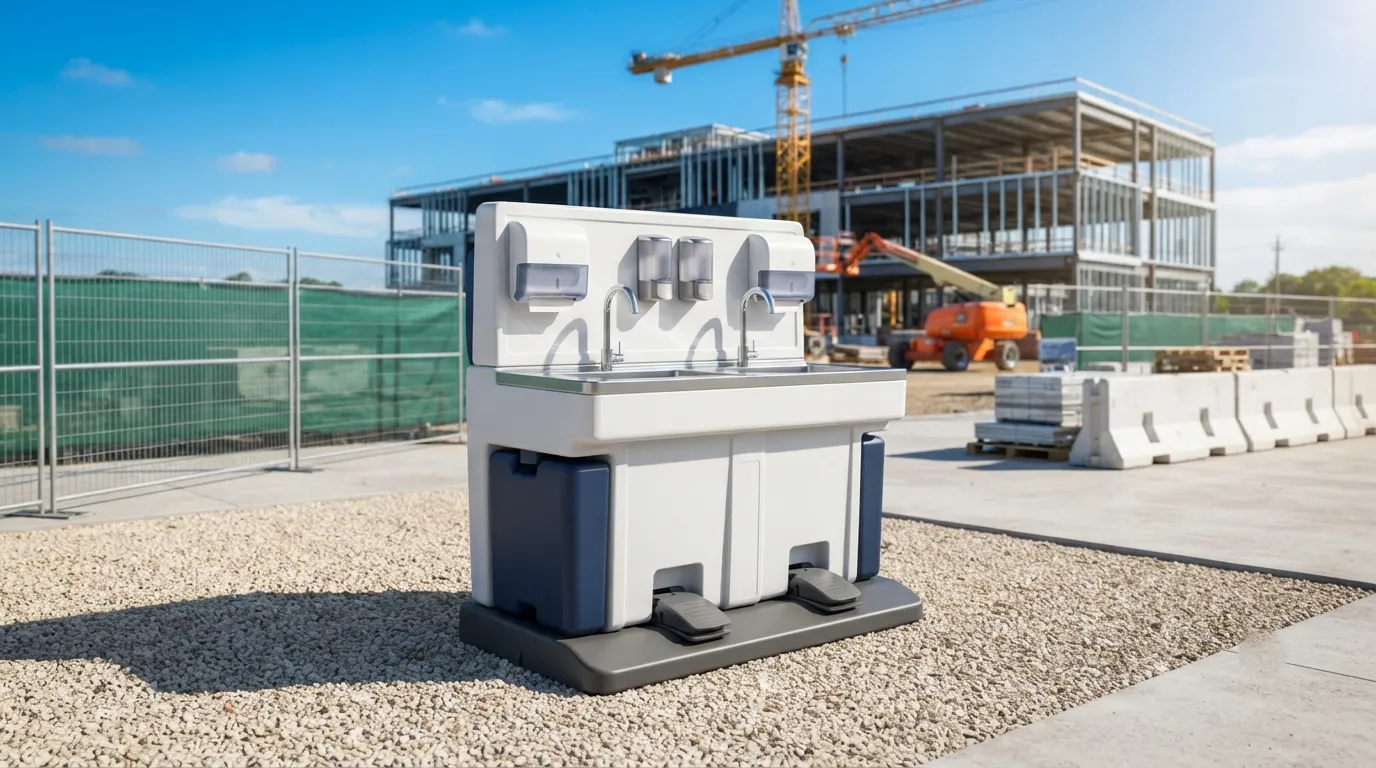
A portable handwashing sink runs on the same no-hookup principle as a porta potty: a fresh water tank feeds the faucet, either by foot pump or a small battery pump, and gray water drains into a separate tank underneath for later dumping. Soap dispensers are built in. Under 29 CFR 1910.141(d)(2), washing facilities need soap and towels or a hand-drying device, hand sanitizer alone does not satisfy that standard, which is why real sinks matter on food-handling or paint-heavy jobs. If your crew is applying paints, coatings, or pesticides, OSHA 1926.51(f)(1) specifically requires washing facilities for that contaminant exposure. Handwashing station rental covers unit options, and portable sink rental breaks down the sink-specific models separately from combo units.
Why do porta potties need chemical treatment?
The blue liquid in the tank is doing three jobs: breaking down solid waste, controlling odor, and coloring the water so users cannot see what is below. Portable toilet chemicals near you generally fall into formaldehyde-based or enzyme-based categories, and most service companies rotate or blend them depending on temperature and usage volume. This is separate from septic tank cleaning chemicals used in a home system, which target a fixed underground tank rather than a portable one. A residential septic tank is typically pumped every 3 to 5 years depending on tank size and household size, a completely different maintenance cycle than the weekly service a rented unit needs. If your Escondido property is on a septic system rather than city sewer, septic pumping service and how often to pump a septic tank cover that separately from anything rental-related.
Servicing and placement
| Service type | Typical frequency |
|---|---|
| Standard rental pump-out | Weekly, per ANSI/PSAI Z4.3 baseline for up to 10 users over a 40 hour week |
| Residential septic tank | Every 3 to 5 years |
| Grease interceptor | At 25 percent fats, oils, grease and solids depth |
A construction worker running to a porta potty mid-shift needs it close, not across a muddy lot. OSHA 1926.51(c) sets ratios: one toilet for 20 or fewer workers, scaling up from there. Placement also has to account for accessible routes; ADA Standards 403.5.1 calls for 36 inches of clear path, and where units are clustered, ADA 213.2 requires at least 5 percent to be accessible units, never fewer than one. For camping trips, how do camping porta potties work comes down to the same tank-and-chemical system, just smaller and often self-carried. See ADA accessible porta potty, porta potty placement guide, and camping porta potty for more on each case. Roll-off deliveries need about 60 feet of straight clearance behind the truck, worth knowing if you're also ordering a roll-off dumpster rental for the same Escondido site.
How often are porta potties cleaned?
Most standard rentals get serviced once a week, consistent with the ANSI/PSAI Z4.3 baseline for typical usage. High-traffic events or larger crews need more frequent visits. See how often are porta potties cleaned for details on adjusting that schedule.
Do porta potties smell?
Some odor is normal, especially in heat, but proper chemical treatment and weekly servicing keep it manageable. Placement away from direct sun and good ventilation help. Full details live at do porta potties smell.
What is a porta potty rental cost in Escondido?
Standard units typically run $100 to $350 a day depending on duration and demand. Weekly and monthly rates bring the per-day cost down. See porta potty rental cost and monthly porta potty rental for full pricing breakdowns.
Are there permit requirements for porta potty placement in Escondido?
Placement in the public right of way needs confirming with the city; specific permit rules were not verified for this page. Check porta potty permit requirements before finalizing a spot.
How do I know how many units my event needs?
It depends on headcount, duration, and whether alcohol is served. OSHA 1926.51(c) ratios offer a construction baseline, but events often need more. Full guidance is at how many porta potties do I need.
Next step
Get a delivery date
Tell us the address, the dates and the headcount. We size the order and confirm the route.